Research
From what the Moon is made of to how it has changed.
Which interiors are consistent with lunar observations — from seismic records and tides to gravity and topography?
My work follows one thread through the Moon's interior. At NASA JPL, I ask what the mantle is made of and how composition and temperature shape its rigidity today. In my PhD at DLR, I will ask how that interior has flowed and deformed over billions of years, as recorded at the surface.
Now — NASA JPL · 2026
What is the Moon made of, deep inside?
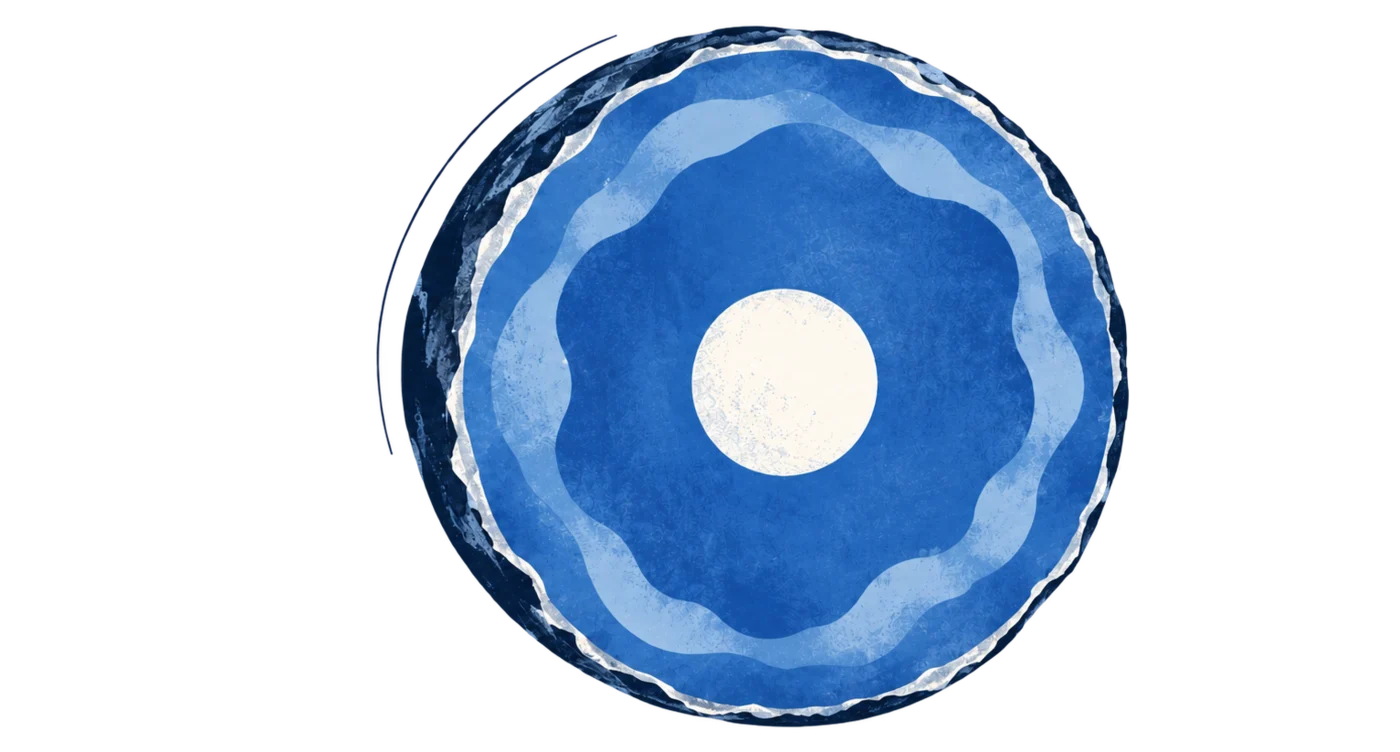
No single composition of the Moon is agreed on. Published estimates of the bulk silicate Moon differ in their iron-to-magnesium ratio and in refractory elements such as aluminium and calcium. Each one builds a different mantle: different minerals, density, seismic velocities and rigidity.
Why it matters
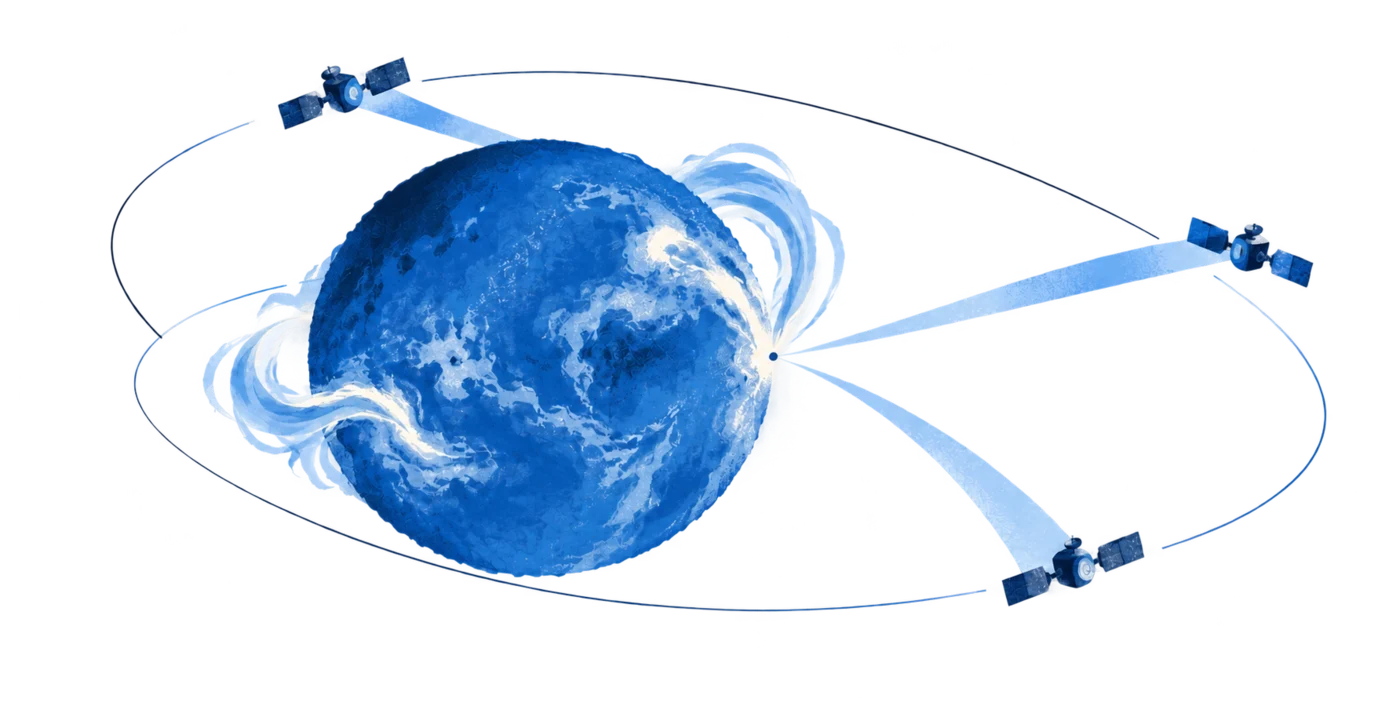
We read the Moon's interior through a handful of observations: its mass, radius and moment of inertia, the Apollo seismic records, and its tidal response measured by GRAIL. An analysis of GRAIL's monthly tides points to lateral differences in mantle rigidity. Interpreting that signal in terms of temperature and composition depends on the reference interior and its rheology — how it deforms and dissipates energy.
Approach
- CompositionsCompare published bulk-silicate Moon compositions in one thermodynamic framework, distinguishing the total silicate inventory from the mantle left after crust formation.
- Mineralogy & propertiesCompute equilibrium mineralogy and equations of state — density, Vp, Vs, bulk and shear modulus — over lunar mantle pressures and temperatures.
- Interior modelsBuild self-consistent 1D models of crust, mantle and core, evaluated against mass, radius, moment of inertia, plausible core properties and Apollo seismic constraints.
- Tidal responseTrack how composition and temperature change rigidity with depth, then explore how lateral structure and rheological assumptions affect the predicted tidal response.
Several interiors, one question
Rather than choosing one preferred interior, I compare several plausible ones — to tell robust predictions apart from model-dependent ones.
My contribution is a traceable workflow linking published compositions, mineral physics and geophysical predictions, with assumptions made explicit at each step.
- Status
- Poster at AAS DPS 2026: “Thermochemical models of the lunar mantle and implications for geophysical observations”. A paper on this work is in preparation. Figures will be added after the meeting.
- Tools
- Python · Perple_X · PlanetProfile · LOV3D · PyALMA3 · Planetary EOS Lab
Interpretation remains conditional on the crustal structure, thermal fields and rheological assumptions. The tidal comparisons are exploratory; they do not yet establish a unique lunar interior or a statistically preferred model.
Next — PhD · DLR Berlin · January 2027
How has the Moon's interior shaped its surface?
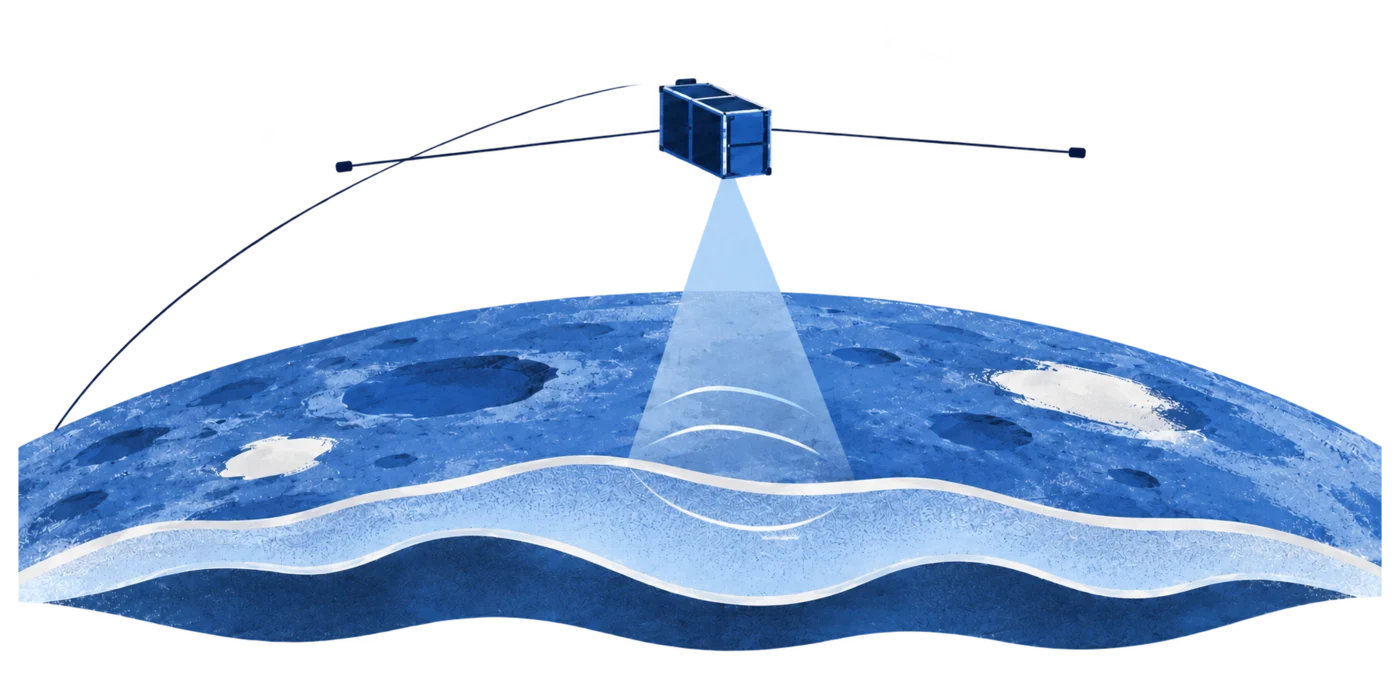
The Moon's surface is a record of its interior. Mare lavas, the slow sagging of impact basins, wrinkle ridges and rifts reflect its thermal and mechanical evolution, alongside the properties of the crust and lithosphere. With gravity and topography from orbit, I will investigate which interior histories are consistent with that surface record.
Planned research threads
- MariaUse gravity–topography inversions to constrain mare thickness and reconstruct the crust before mare formation. Crater statistics will help estimate surface ages and reconstruct the volcanic history.
- BasinsModel the viscoelastic relaxation of large impact basins, and use crater-floor slopes from elevation models as a record of post-impact deformation.
- Ridges & riftsUse that relaxation to constrain how wrinkle ridges and rift systems formed at the margins of large basins.
- MantleCompare predicted and observed crustal structures to constrain plausible mantle viscosities, accounting for the assumed loading and thermal history.
- Where
- Department of Planetary Physics, DLR Institute of Space Research, Berlin
- Tools
- Python · spectral gravity–topography inversion · ALMA (viscoelastic relaxation) · crater statistics